

If you’ve read my Modern Manifesto for Sponsorship Effectiveness, you’ll know that principle one is Plan For Decades. This is based on observation, case study analysis, and broader marketing effectiveness research around campaign duration and the compound effects of consistency.
So when the Sponsorship Effect content schedule called for a new addition to the Sponsorship Hall of Fame, I wanted to find one that exemplifies the principle of longevity. But I also wanted to showcase examples aren’t necessarily the most obvious, most salient, or most written-about.
And in my research for deals that ran for twenty years or more, I found one I didn’t initially know much about: the Mars x NASCAR that ran from 1990 to 2022. It’s a fascinating case, and it earns its place not for the length of the tenure but for the intent visible at every stage of it.
Some in the sponsorship sector will argue for short-term deals over long-term. This is one of the clearest cases I’ve found to counter that argument.
Let’s get stuck in and see how it stacks up against the manifesto.
1. Plan for decades: 10/10
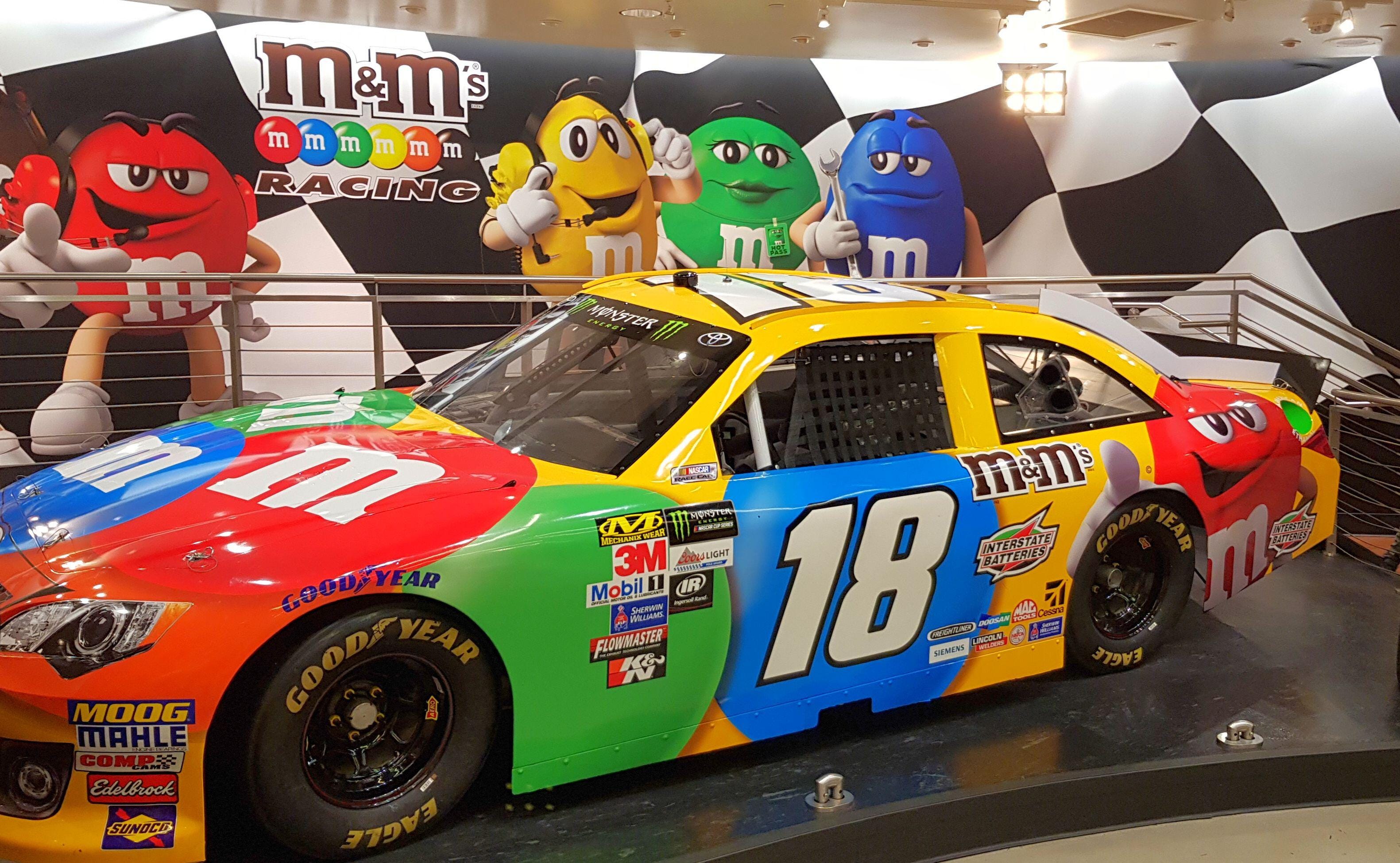
As a company, Mars was in NASCAR for 33 years, steadily building a presence within the sport. Snickers entered as a team sponsor in 1990 with Snickers on Bobby Hillin Jr’s car. M&M’s took over Ernie Irvan’s No. 36 at the end of the 90s. The Official Partnership with the league came in 2000, and primary sponsorship of Kyle Busch’s No. 18 at Joe Gibbs Racing ran from 2008 to the end in 2022. Each stage was incremental, designed to increased share of voice in the sport. We can infer the decisions were based on the evidence of what happened before, which is what planning in decades actually means: not signing a long contract, but treating the sponsorship as an asset whose value compounds and expanding the rights to grow with it. It is a perfect example of consistency over decades.
2. Start with business objectives: 9/10
Commercial intent is on the public record, which in sponsorship is vanishingly rare. Mars described the sponsorship as creating a fifth selling season on a par with its Christmas trade. NASCAR’s 2019 renewal release describes the company using the sport to “debut new products, build experiential marketing platforms for consumers and drive business-to-business deals”. The missing point is for the lack of a concrete, declared goal of sales volume or market share.
3. Align the rights schedule to the objective: 9/10
The rights grew in step with the job they were asked to do. Team sponsorship bought visibility, and the car livery then became launch media: Mars introduced the M&M’s Chocolate Bar to the United States with the Daytona 500 as its stage, via a special paint scheme on the No. 18 and an on-site activation, and gave Caramel, Flavor Vote and White Chocolate the same treatment. The Official Partnership unlocked the piece that made the whole system commercial, with retail point-of-sale tied to the sport, with regional sell-through linked to race windows. When you look at the rights schedule across the decade, you can reconstruct the objectives without ever seeing the brief.
4. Integrate into the brand narrative: 8/10
The candy-coloured car is the brand’s distinctive asset moving at 190 miles an hour.
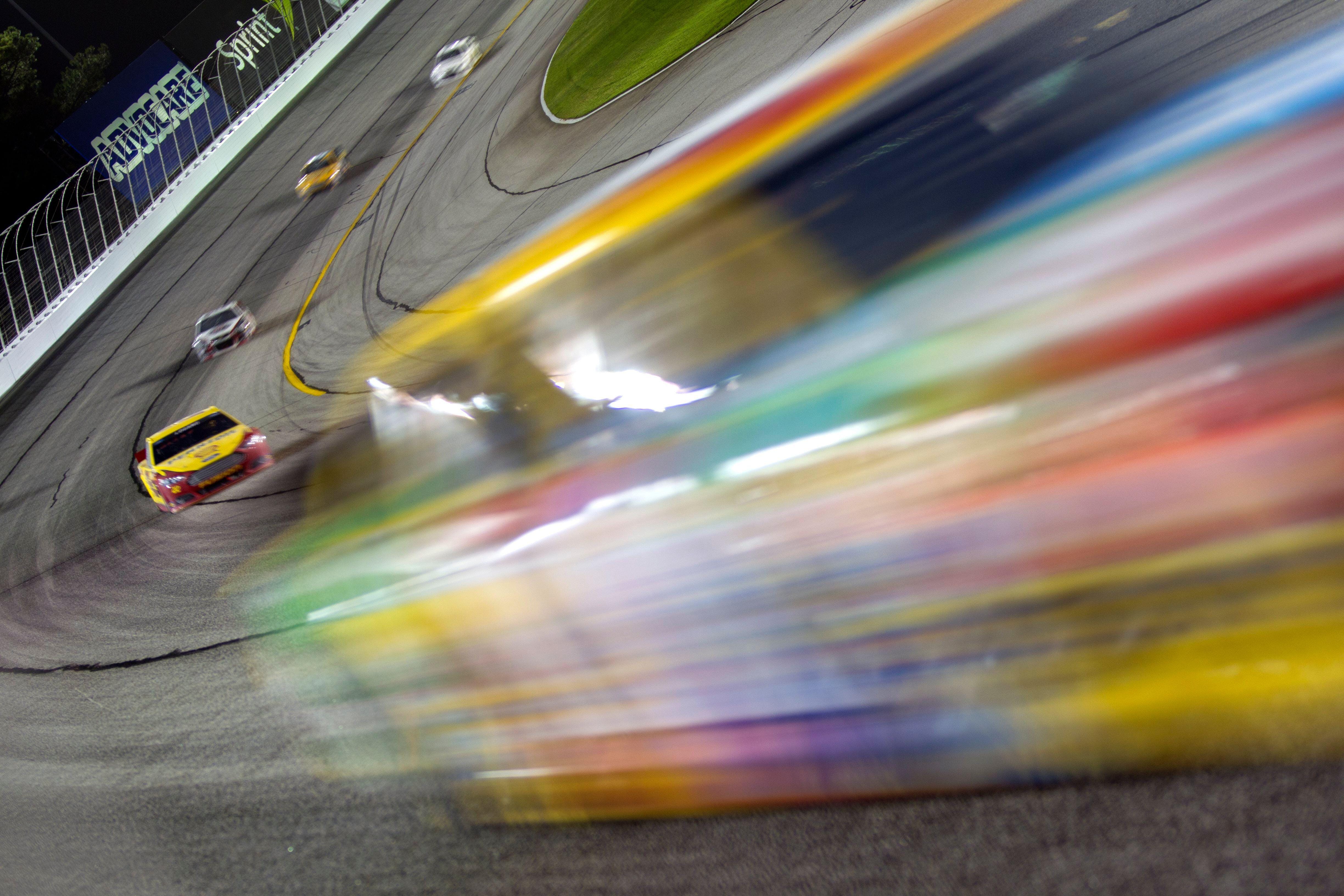
The colour system, the characters and the register of colourful family fun translated into NASCAR without any adaptation at all, because the visual world of the brand and the visual world of the sport were already neighbours. The M&M’s characters extended into television work alongside Busch, and the No. 18 became one of the most recognisable cars in the field.
I’ve kept the score at eight because the integration lived mostly in the livery and the visual system. There was never an owned narrative platform above the paint, an organising idea that could have made the sponsorship the brand campaign rather than the brand campaign’s most colourful medium, and our SEF research finds that the strongest cases are exactly that.
5. Activate with conviction and scale: 8/10
The conviction is not in doubt: grocery-scale retail activation across the country, experiential platforms at the tracks, the #18n18 social programme through Busch’s own channels, and, in the farewell season, a first-ever Cup race entitlement, the M&M’s Fan Appreciation 400 at Pocono. The deduction is for how late the broadcast multiplier arrived. NASCAR’s own VP of partnership marketing dated Mars’s first television spot in the sport to around 2011, more than a decade into the tenure. Les Binet and Will Davis’s Go Big or Go Home work puts budget, and the reach it buys, at the centre of what drives incremental profit, and for 10 years the deal went without it despite the business having pockets deep enough to fund it.
6. Understand the fan: 9/10
NASCAR fans are deeply proud of their sport, and that translates as into purchase as an act of identity. Mars saw that in their own data: 69% of fans said the sponsorship influenced which candy they bought, with 72% brand loyalty over competitors. It’s a mechanism no other American sport reproduces at the same intensity (nor any other British sport, for that matter). Some deeper evidence of understanding NASCAR culture is the partnership with Busch himself. He was, for most of his career, the sport’s most polarising figure, booed as often as cheered, but Mars understood that there is an element of what pro-wrestling calls ‘kayfabe’ within NASCAR, and Bush was NASCAR’s most prominent heel. It kept him for fifteen years because it understood that NASCAR fans value a divisive winner. It also kept the brand in every argument at every race. At the exit, Busch thanked the Mars family for accepting him as he was. Busch tragically died from pneumonia earlier this year, and in a touch of class M&Ms announed it would return to NASCAR for September’s Bristol Night Race, with Joe Gibbs Racing carrying its iconic livery, as a tribute. That’s fan insight expressed as a talent policy.
7. Invest in creativity: 7/10
The candy car is a genuinely good distinctive-asset decision, with the brand’s colours and characters made mobile, while the paint-scheme-as-launch-vehicle idea turned a rights asset into a repeatable creative format. What the case never produced is a genuinely famous campaign built on top of the sponsorship, a film or an idea that travelled beyond the sport the way the strongest creative work in the dataset travels. The creativity concentrated in liveries and characters, executed consistently for decades, which builds memory but does not multiply it the way the Creative Dividend evidence says a big campaign idea can. Seven is a good score on this principle, but it’s also where there might have been room for this sponsorship to be more than what it was.
8. Incorporate talent with intention: 9/10
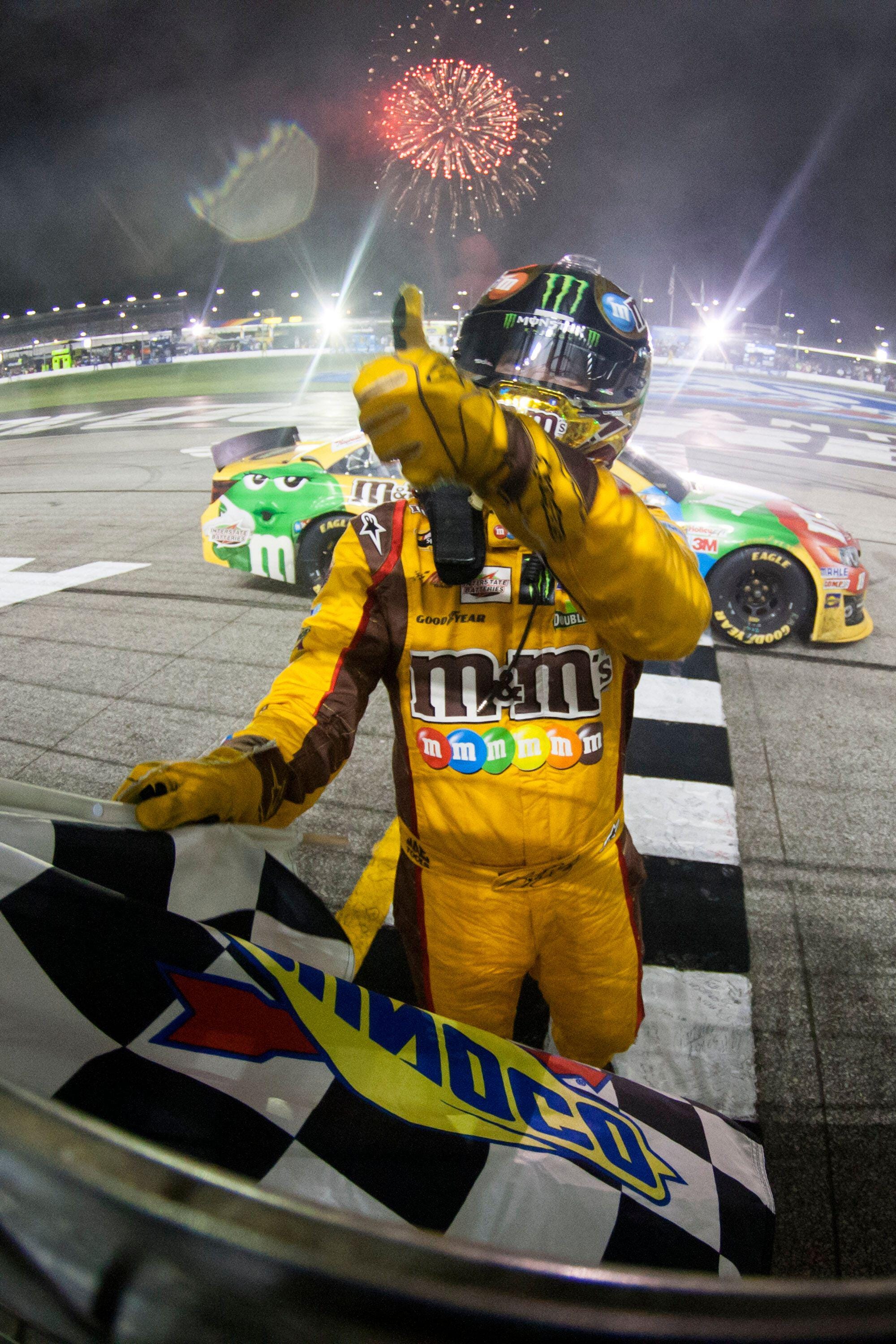
The direct deal with Busch was a key addition to the Official Partter deal with NASCAR. He secured 55 wins while carrying Mars livery, Cup titles in 2015 and 2019, and had a social presence the brand ran product work through directly. SEF’s dataset finds athlete talent over-represented in the campaigns that drive sales rather than the ones that drive brand, and Mars used its athlete precisely that way, as the conversion engine for a sponsorship whose fame was built by the car and the league rights. The intention ran in both directions. When Busch’s conduct in a 2011 Truck Series race crossed the brand’s values, Mars pulled its branding from the car for the final races of that season, then returned, then stood by him for another decade.
9. Measure broadly: 8/10
This is where evidence being on the public record is so useful in helping understand the impact of long-term deal like this. Brand tracking, recognition ranking, loyalty measurement, purchase-influence surveys and a financial ROI calculation, have cited publicly across a decade. In our dataset of 92 coded cases, only 21 per cent produced any financial ROI figure at all, and 2 per cent quantified profit. Mars reported a 4:1 ROI at a time when most of the industry was still reporting AVE. The measurement clearly informed decision-making, because the expansion of the partnerhip track it. Two points held back for the limits of what is public: everything we can see is self-reported through the brand’s and the league’s own channels, and no econometric or profit-level evidence ever surfaced; an IPA case like Guinness’s would have taken it to 10. On the record available, this is still among the most measured sponsorships of its era.
10. Build a partnership, not a sponsorship: 9/10
Mars spent 33 years in the sport, 22 years as an Official Partner for NASCAR, fifteen years with one team, with renewals in 2014, 2015 and 2019, each announced jointly with executive quotes on both sides. Its exit was conducted as collaboratively as the tenure: private notice was given in the summer of 2021, public announcement that December, a farewell season co-produced with the team, and a race entitlement bought as a parting investment in the fans. Joe Gibbs described the Mars relationship as the best example of what the sport makes possible, and the departure was material enough that it factored into the end of Busch’s sixteen-year relationship with the team. Mars gave its reason for leaving in plain commercial language: a finite budget and a desire to try new things, which is the same language it had used about staying.
The final total: 85/100
It’s a pretty stunning score, and this case is strongest on some of the principles the sponsorship sector finds hardest: objectives, measurement, rights design and talent discipline, and weakest only on creativity, where a very good distinctive asset was never topped with a famous idea, and on the decade lost reach before the first television spot.
The lesson I take from it is that longevity is not necessarily a virtue in and of itself, but what it enables. 33 years of functional logo exposure wouldn’t have earned a place in the Hall of Fame. But 33 years of escalating, measured, publicly accountable commercial decisions is why it does. It’s also striking that a brand knows why it stays also knows when it is done.
The last thing Mars bought in NASCAR was called the Fan Appreciation 400. On the evidence of the previous 33 years, the name was accurate.
The Hall of Fame is a regular series on The Sponsorship Effect.
The Sponsorship Effectiveness Hall of Fame: State Farm x NFL

I’m aware that when writing about sponsorship effectiveness weekly, it’s easy to sound negative. This whole focus of mine is based on the identification of a gap in knowledge and practice that I think is holding the sector back, and so it could be easy to fall into the trap of consistently pointing out the potential sources of the problem, or the ways i…
The Sponsorship Effectiveness Hall of Fame: Guinness x The Six Nations
Two days ago, at the second Sponsorship Effectiveness Forum, we heard from two titans of effectiveness: Tom Roach, VP of Brand Strategy at Jellyfish, and Craig Mawdsley, founder of craig+bridget.
The Hall of Fame: adidas x FIFA

It’s been a while since I published a Hall of Fame article, but seeing as the World Cup kicks off tomorrow, it feels like the right time to celebrate one of the most enduring global partnerships of all: adidas x FIFA.