

I’ve been a Japanophile for most of my adult life, even though I've never had the chance to visit.
It started with the electronic music of Yellow Magic Orchestra, Ken Ishii, Rei Harakami, DJ Krush, and the Shibuya Kei scene of Pizzicato Five, Cibo Matto, and Fantastic Plastic Machine in the 1990s.
Then came the food, the cinema, and, more recently, my interest in Japanese fashion, particularly denim.
I find Japanese denim fascinating because of its origins: when American mills abandoned their old shuttle looms for faster machines, a group of artisan Japanese weavers kept theirs, retained the skills to run them properly, and started creating versions of American workwear that ‘denimheads’ around the world revere. If you want to enjoy the closest thing you can get to an original 1950s pair of 501s in 2026, don’t buy Levi’s; go Japanese.
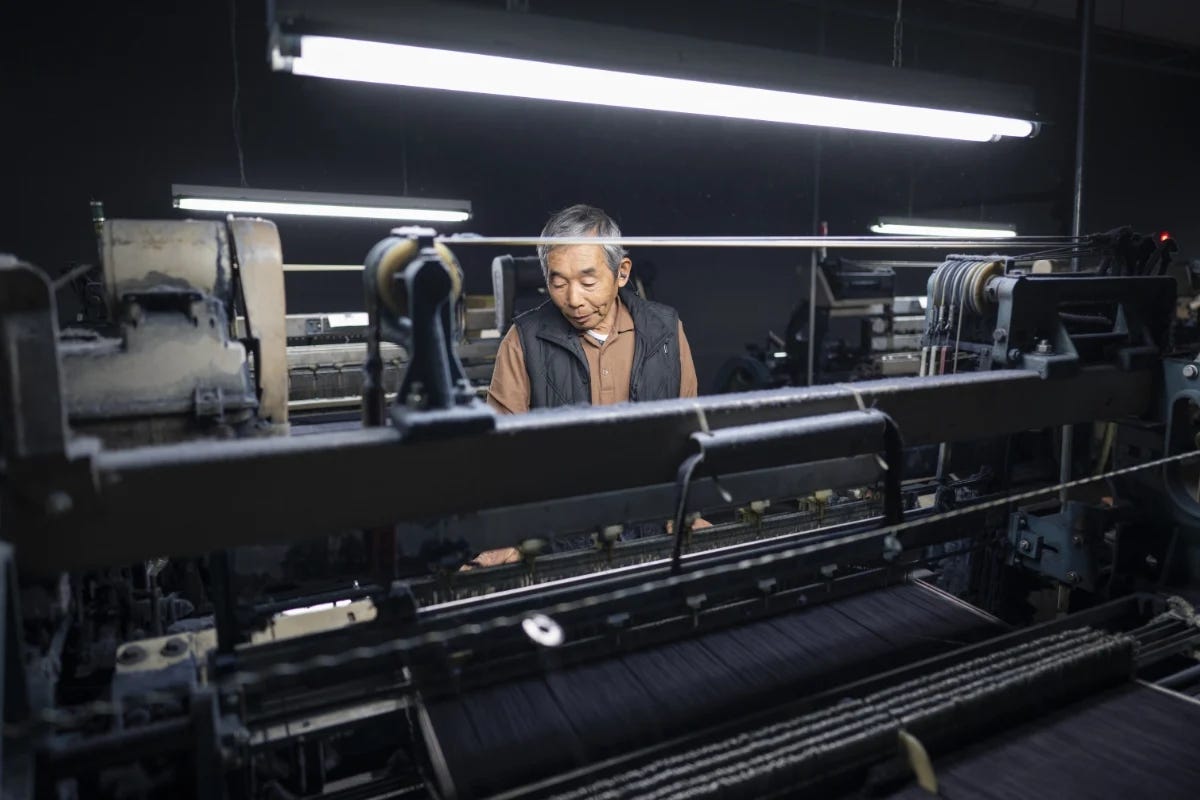
Whether it’s techno or denim, one thing I’ve observed is that Japanese culture often takes something apart, works out exactly how it functions, and then does it with levels of creativity, skill, and precision that can often surpass the people who invented it.
That’s why I’ve always found the sponsorship market puzzling.
I have some skin in this game. I spent a few years at Sid Lee, owned by Hakuhodo, and before that at Iris, which is Korean-owned, so the APAC region's marketing cultures have been in the background of my working life for a long time.
The story I was always told about Japanese sponsorship went roughly like this: two agencies control everything, the relationships matter more than the numbers, and nobody asks many questions about what any of it did from a commercial perspective. I have always wondered how much of that was true and how much was the usual Western shorthand for a market we do not understand.
So, for this month’s historical deep dive, I took a proper look.
The last Japanese Olympic sponsor
On 1 October 2024, Bridgestone confirmed that it would not renew its IOC Olympic Partner deal after Paris. Toyota and Panasonic had already said the same thing. That meant that, for the first time since the programme launched in 1985, no Japanese company was among the worldwide Olympic partners. Panasonic had been in the programme since the very first cycle, and reports put Toyota’s deal, signed in 2015, at $835 million.
What's strange is that only three years earlier, Tokyo 2020 raised $3.1 billion from domestic sponsors. That is roughly three times what London 2012 raised from its local market, and it remains the largest domestic sponsorship total in Olympic history.
So the same corporations that were willing to pour record money into a home Games walked away from the global programme after just one cycle.
What follows is the story of the two agencies that built that market, what that duopoly did to how Japanese brands buy sport, and what it means for those of us working on sponsorship in Western markets.
How did two agencies end up running the market?
This is ultimately the story of duopoly of two agencies: Dentsu and Hakuhodo.
Hakuhodo opened its doors in 1895 and Dentsu followed in 1901. Dentsu ran a news wire alongside its advertising business until it sold the news division in 1936, and after the war it helped build Japan’s commercial radio and television industries from scratch, which is where much of its leverage over media owners comes from.
In 2016, Digiday estimated Dentsu’s share of the Japanese advertising market at around 21%, worth roughly $42 billion, with Hakuhodo at 12% (ADK was third at 5%); roughly a third of an entire nation’s advertising spend is rung through the tills of just two companies.
While those market share numbers may not seem staggering, the two agencies have huge power, and for two reasons.
First, Japanese agencies can work for direct competitors. A single agency can run Toyota, Nissan, Honda, and Mazda at the same time, and the whole arrangement is held together by trust and an expectation of absolute discretion rather than anything resembling a conflict policy.
The second reason is that they operate at both ends of the industry. Dentsu buys media on behalf of advertisers while also controlling the selling rights to programmes such as TV Tokyo’s World Business Satellite, which means it can act as both buyer and seller in the same transaction.
Imagine an agency that sells you the airtime, buys that airtime on your behalf, and runs your biggest rival’s account from a different floor of the same building. In London we would call that a conflict of interest. In Tokyo, it is standard working practice.
How the Japanese model went global
In 1982, Horst Dassler, the Adidas boss who had spent the previous decade making himself indispensable to FIFA, broke with his former collaborator Patrick Nally and set up ISL in Lucerne. Dentsu took a 49% stake in the new company. ISL won FIFA’s marketing rights and, from 1985, also ran the IOC’s new TOP programme. Japanese exporters were already on board by then, with Canon, JVC, Fujifilm and Seiko having all sponsored the 1982 and 1986 World Cups through deals that Nally originally put together.
ISL and Dentsu built a massive global pipeline. Marketing Week outlined how it worked in 2001: as ISL won the rights, Dentsu auctioned them to its own clients in Japan, earning a commission on the deals and taking a share of ISL’s profits.
The numbers on the 2002 World Cup show you what that was worth. Dentsu signed Toshiba and NTT alongside Fuji Xerox, Fujifilm and JVC, and Marketing Week estimated the sponsorships at around $40 million each, with roughly $150 million of associated media spend behind each sponsor. That is close to four dollars of media for every dollar of rights fee, and the agency that sold the rights was also being paid to buy the media.
Was that a bad deal for the sponsors? Not necessarily. The sponsorship sector has argued for years that activation is where sponsorship effectiveness is won or lost, so a system with a commercial incentive to push up activation spend isn't automatically ripping anybody off; in theory, it should benefit the brands involved. The question is whether anybody ever checked what the $150 million achieved, and as far as I can tell, nobody did.
Side note: ISL collapsed in 2001 owing £153 million, and the bribery case that came out of the wreckage changed what we all thought we knew about how FIFA worked. Dentsu had reduced its stake to 10% in 1996 and wrote off $42 million in guarantees when the company went under. It carried straight on regardless, as World Athletics’ commercial partner through to 2029, as the IOC’s broadcast rights partner across 22 Asian markets through to 2024, and as the seller of AFC commercial rights in Japan.
What did the duopoly do to the way Japan buys sponsorship?
Category exclusivity became negotiable
Tokyo 2020, with Dentsu appointed as its exclusive marketing agency, abandoned IOC-style category exclusivity altogether for the first time since the revolution ushered in at LA84. Shintaro Sato at Waseda University counted eight categories that ended up with more than one sponsor: tourism, security, printing, airlines, railways, postal services, food and newspapers.
Mizuho and Sumitomo Mitsui were both banking sponsors of the same Games. NEC and Fujitsu were both electronics sponsors. In a market where a single agency happily serves both Toyota and Nissan, the idea that a rights-holder should protect one client from another was easily shelved to hit a sales target. And what a sales target it was, because the organisers ended up with 68 domestic sponsors paying a combined $3.3 billion, which works out at roughly $48 million each.
Now think about what we know about how sponsorship actually works on people. The mental availability Byron Sharp describes builds only if the audience correctly links the brand to the property and not any others; the less unique the association is, the less valuable it is, as per Jenni Romaniuk’s work on distinctive brand assets.
Tokyo 2020 saw four national newspapers sponsoring the same Games, instantly reducing the chances of the Japanese public associating any of them with the property.
Sponsorship got accounted for as an expense, not an investment
In August 1954, Japan’s National Tax Agency wrote a notice confirming that a parent company covering its professional baseball club’s losses could deduct those payments as an advertising expense, up to the size of the deficit. Seventy years later, the clubs are still named after the companies that own them: the Yomiuri Giants, the SoftBank Hawks, the Rakuten Eagles, the Nippon-Ham Fighters. Underneath the professional game sat the jitsugyōdan, the company teams made up of a firm’s own employees, and the number of those in corporate baseball fell from 237 in 1963 to 84 by 2008 as one recession after another took its toll.
But with a legacy of a club’s losses being a tax-deductible line in the P&L, and the team doubling as a staff welfare scheme, its not completely surprising fewer questions were asked about what the sponsorship did for growth achieved.
The evidence base barely exists
Our SEF dataset contains 92 published effectiveness cases. Exactly one is set in Japan, and it's Visa, an American brand, reporting brand affinity up five points from 54% to 59% around Tokyo 2020. Only two Japanese brands appear anywhere in the dataset, and those are Toyota in the United States and Nissan in Mexico. No case in the set shows a Japanese brand measuring sponsorship in its home market.
Side note: award databases lean heavily towards Western entrants, so some of this is a story about where effectveieness cases are written up rather than where measurement happens. Even so, one of the largest advertising markets on earth has published almost nothing about whether its sponsorships work.
Then the gatekeeping itself became the story. Haruyuki Takahashi, a former Dentsu executive on the Tokyo 2020 organising board, faced indictment over roughly ¥198 million in alleged bribes connected to sponsors and licensees including Aoki and Kadokawa, and he pleaded not guilty in December 2023. In a separate case, Dentsu, Hakuhodo, and four other firms were indicted in 2023 for rigging contracts for Olympic test events worth about $4.1 million between them, and those same firms went on to win some $305 million of Games work. Hakuhodo was fined ¥200 million in July 2024. Dentsu was fined ¥300 million, and that fine was upheld on appeal a year later. In June 2023, the IOC instead gave its 22-market Asian broadcast rights for 2026 to 2032 to Infront.
Did the model spread across the rest of Asia-Pacific?
The Japanese model spread less widely across the region than you might assume, and even then it is much less common now than it was ten or twenty years ago.
Dentsu’s influence across Asia-Pacific came from owning rights rather than from reproducing the agency structure in other markets. I have not found evidence of a Dentsu-style duopoly in Korea, China, or Australia, and if you know those markets better than I do, I would genuinely welcome a correction.
When the Asian Football Confederation sold its main commercial rights for 2021 to 2028, they went to DDMC Fortis, a Chinese-Swiss partnership, with Dentsu keeping the sales role in Japan alone.
Outside Japan, Dentsu is contracting rather than expanding. The group reported a record net loss of ¥327.6 billion for 2025, which included a ¥310.1 billion impairment on its overseas business, and it put that international business up for sale before dropping the sale in February 2026 and saying it would consider disposals market by market instead.
What lessons can we learn from this?
If you are a Western brand or rights-holder entering Japan, there are a few practical takeaways.
Don’t assume category exclusivity, because the market won’t assume it for you, and your competitor’s agency may well also be your agency.
It’s entirely reasonable to ask an agency who else it works for in your category and whether it also represents the property it is selling to you.
You need to bring your own measurement framework because the local system isn’t built to provide one.
If you are advising a Japanese brand heading the other way, the lesson runs in reverse: at home, presence and endorsement were enough. Abroad, rights are sold on audience size, and activation is more commonly judged by the outcomes they produce.
The encouraging thing is that Japanese brands can clearly work that way. Toyota’s “Start Your Impossible” campaign in the United States in 2017 ran a Super Bowl film and a mobility platform off the back of the Olympic and Paralympic rights, reporting Olympic association above benchmark and gains in brand opinion and preference.
The creative work is heavy on what System1 calls ‘showmanship’ features and light on ‘salesmanship’ features, which is precisely the emotional, broad-reach profile that Les Binet and Peter Field associate with long-term profit.
A retreat from the Olympic stage
In 2024, the last three Japanese brands exited the TOP programme. The Associated Press reported that the three departing sponsors were weighing up the delayed Games, the empty stadiums, the rising costs, and the corruption cases, while Bridgestone said that global motorsport was a better showcase for its tyres. My own hunch is that the home Games may have been the real reason Japanese money was still in the programme at all.
I’m not necessarily saying Japan gets sponsorship completely wrong. There are many Japanese brands actively involved in sponsorships right now with rights holders across Europe, North America and beyond.
What’s interesting, as with much of Japanese culture, is how different Japan’s domestic market is from our own. For seventy years, the system did exactly what it was designed to do: tie the country’s biggest companies to the biggest events through a small number of trusted intermediaries, with the tax office covering the losses and the agency taking its cut at both ends of the deal. It was never asked to prove a return, so it never developed the habit.
From an effectiveness perspective, it's a reminder that cultural expectations around sponsorship can differ significantly depending on who you’re talking to and where they’re from.
And it’s a reminder that, as strategists or planners of any kind, we should lift our heads out of the European mindset once in a while, look around, and remind ourselves of the nuances of a truly global market.