

How did we get here?
Sponsorship’s effectiveness gap has deep roots
One of the things that has struck me since I began working in sponsorship is how often people with decades of sponsorship experience tell me they don’t work in marketing.
This seems so odd to me. Sponsorship is a way of promoting a brand or product to a particular audience, which means it sits squarely in the promotional P of the marketing mix. It’s one of many ways a brand can bring its positioning to life (which is why Rolex sponsors Wimbledon and not Leeds Rhinos).
Sponsorship is part of marketing, whether the industry likes that fact or not.
Despite that, many sponsorship pros don’t see themselves as marketers. This is a false, self-defeating and self-imposed divide. I also believe it’s a major root cause of a lack of effectiveness thinking in sponsorship.
If you don’t think of yourself as a marketer, you won’t attempt to understand marketing. You won’t prioritise marketing knowledge when hiring new talent. You’ll train them to focus on the wrong things, which means that you ultimately perpetuate the myth that marketing is something that happens elsewhere.
And because of this, the sector as a whole lacks the language to persuade sceptical brand-side marketers, media agencies and the wider marketing community that sponsorship is an invaluable part of the modern marketing toolkit.
But how did we get here? I’ve been doing some digging into the history of the sponsorship sector to see how it ended up divorced from marketing. The answer is that deep structural forces were created decades ago.
Let’s have a look.
The early days of sponsorship
In Paul Feldwick’s excellent book Why Does The Pedlar Sing, he tells the story of how Coca-Cola became one of the most famous brands of all time:
“Coca-Cola’s extraordinary advertising investment in the 1910s and 1920s was not driven by any realistic expectation that advertising would persuade people of the drink’s merits. Its purpose was to make the brand unavoidable: to ensure that Coca-Cola was known everywhere, by everyone. In modern terms, it was a strategy of fame.”
It was this goal to be everywhere, all the time, that led to Coca-Cola’s partnership with the 1928 Olympic Games in Amsterdam. The brand increased awareness in Europe and shipped 1,000 cases to sell at the event, giving many Europeans their first chance to try it.
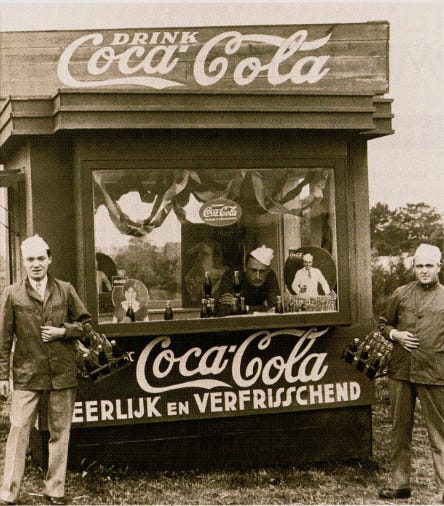
What’s important to note is that this was seen as part of the brand’s broader marketing plan. Deals like Coca-Cola’s were made by the brands themselves or by their advertising agencies. The people making those decisions - brand managers, advertising directors, publicity departments - saw themselves as doing marketing work because that’s exactly what they were doing. Sponsorship was one promotional tactic among many, sitting alongside advertising, PR, and direct marketing.
This wasn’t a golden age, and it wasn’t perfectly integrated. But the centre of gravity was clear. Sponsorship was treated as marketing because the people controlling it were marketers.
The foundation: European commercialisation of rights
What changed everything was the moment sport itself became a commercial product to be packaged and sold. From the late 1960s into the 1970s, European sport began to professionalise its commercial rights. Figures like Patrick Nally, working closely with Horst Dassler at adidas, pioneered the bundling of global sponsorship rights for federations such as FIFA and the IOC. Category exclusivity, global packages, and long-term contracts became the organising principles of a new industry.

This was a genuine innovation. It created enormous value for rights holders. But it also marked a decisive shift in who controlled sponsorship.
The people building this system were not brand strategists or advertising planners. They came from sport, manufacturing, politics and commercial negotiation. Their expertise lay in relationships, governance, and deal-making, not in understanding how sponsorship might work as marketing.
From this point on, sponsorship began to professionalise around selling access rather than delivering marketing outcomes.
The advent of marketing effectiveness
At exactly the same moment sponsorship was professionalising around deal-making, some of the brightest advertising brains in London were creating account planning.
In the late 1960s, thinkers Stephen King and Stanley Pollitt, and agencies like JWT and BMP, developed account planning to link research, strategy, and creative work. The planner’s role was to bring evidence and consumer understanding into decision-making, shifting advertising away from intuition and towards demonstrable commercial impact.

The Effies awards were launched in the US in 1968, and the UK’s IPA Effectiveness Awards in 1980. This crystallised an effectiveness culture that continues to this day. It encouraged advertising to become increasingly accountable. Measurement frameworks improved. Econometrics gradually entered the mainstream. Creativity was studied, tested and refined.
Sponsorship missed this turn entirely. As ad agencies were building intellectual infrastructure around how communications drive profit, sponsorship was being codified by commercial intermediaries whose success depended on selling rights.
Once these two paths diverged, they never really re-converged.
LA84: The commercial model proves itself
The 1984 Los Angeles Olympics - which I’ve written about previously - proved that this seller-side model worked.
Peter Ueberroth radically simplified the sponsorship structure, reducing hundreds of sponsors to a small number of exclusive categories. Scarcity became the organising principle. If a brand wanted to be associated with the Games, it paid for exclusivity.
The results were extraordinary. Sponsorship revenues increased by an order of magnitude and the Games delivered a substantial surplus. Within a year, the IOC launched the TOP programme, scaling the same model globally.
What’s critical is not just that LA84 succeeded, but that it succeeded without any meaningful involvement from advertising agencies or marketing strategists. The expertise that mattered was commercial: packaging, negotiation, exclusivity, and relationship management.
The modern sponsorship industry had proof that it could generate enormous profit without being accountable for marketing outcomes.
The US brings Hollywood’s talent agent model to sport
In the late 1980s and through the 1990s, the dominant players in US sports marketing came from Hollywood talent agencies that saw sport as a natural extension of their entertainment representation business.
Lew Wasserman and MCA had pioneered the modern talent agency model in Hollywood. They packaged talent, negotiated deals, took commissions, and built power through exclusive relationships. When sport started generating serious commercial revenue in the 1980s, that same model looked applicable. Athletes were talent. Teams and leagues were properties. Sponsorships were deals to be brokered.
IMG, founded by Mark McCormack in 1960, was perhaps the earliest example of this crossover, initially representing golfer Arnold Palmer before expanding into a vast sports marketing empire. McCormack’s innovation was treating athletes like Hollywood stars and building a business around representing them and brokering their commercial relationships. IMG became the template: athlete representation on one side, sponsorship sales and property consulting on the other.
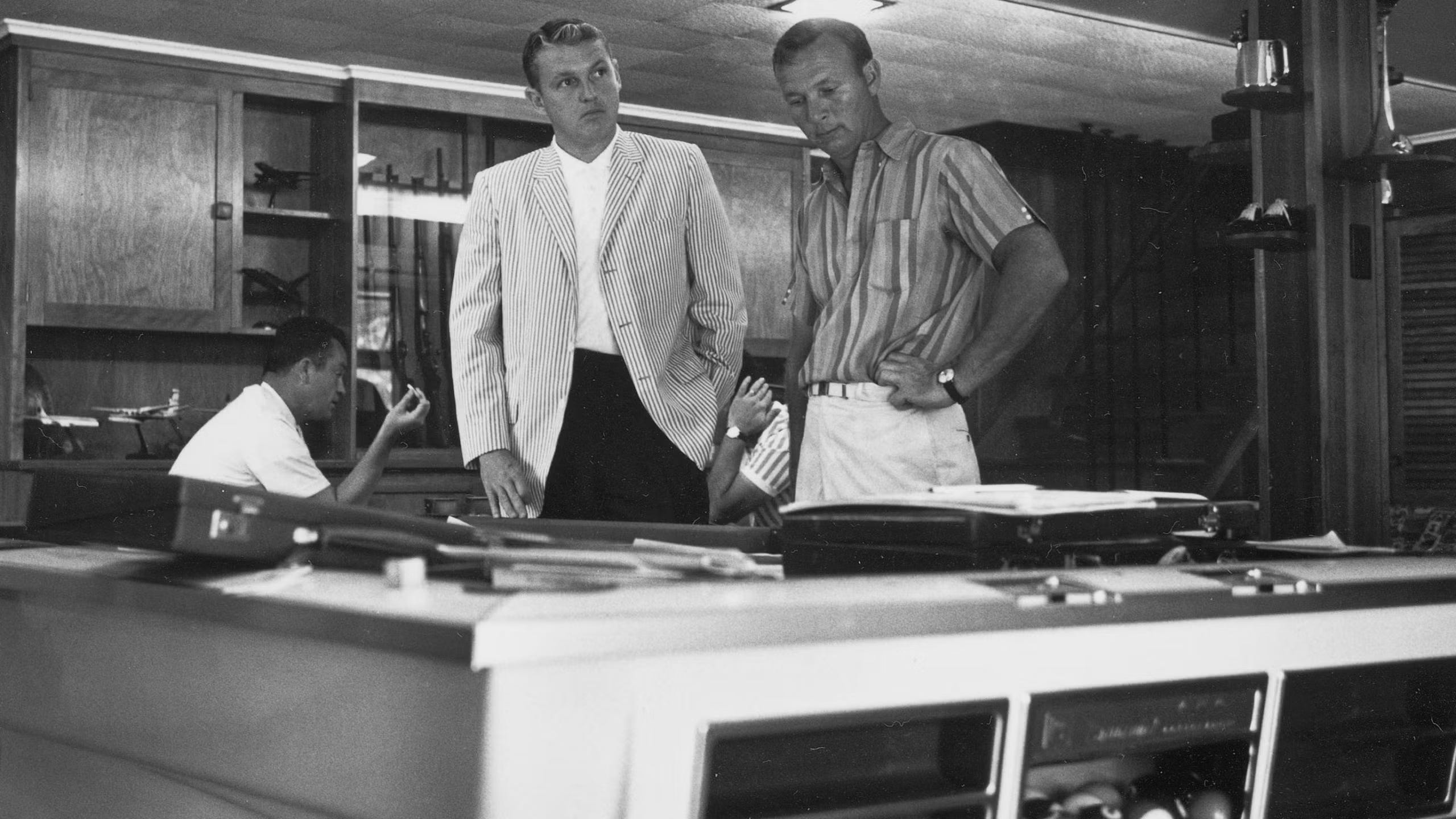
By the 1990s, the Hollywood agencies themselves moved directly into sport.
CAA (Creative Artists Agency), traditionally one of Hollywood’s most powerful talent agencies, launched CAA Sports in 2006, but had been circling sports marketing for years before that. Their logic was straightforward: the skills that made them dominant in film and television - packaging talent and negotiating deals - translated directly to sport.
Endeavor (originally William Morris Endeavor) followed the same path, eventually acquiring IMG in 2013. That acquisition brought together Hollywood’s deal-making culture with sport’s oldest and most established marketing agency, creating a combined entity built entirely around the talent agent model.
Wasserman, founded in 2002 by Casey Wasserman (Lew Wasserman’s grandson), was perhaps the purest expression of this convergence. From the start, Wasserman combined athlete representation with sponsorship consulting, event management, and property representation. All were organised around the same commercial logic that had built Hollywood agencies.
These weren’t marketing agencies deciding to add sports. These were talent agencies recognising that sport had become a monetisable entertainment category, and bringing their existing business model to a new market.
What the talent agent model brought to sports marketing
The capabilities these agencies brought require enormous skill and expertise. They could negotiate at the highest level, navigating complex, multi-party, multi-territory agreements worth tens of millions. They were also experts in relationship management and in building and maintaining networks across federations, leagues, broadcasters, and brands
They knew how to structure contracts and how to protect clients through exclusivity clauses, termination rights, and performance guarantees. They could package deals, bundling rights, access, and assets into compelling commercial propositions. And they could navigate organisational politics, understanding power dynamics within sports organisations
Make no mistake: this work is hard. Brilliant negotiators are worth every penny. The people who can structure a Premier League deal, or broker a naming rights agreement, are operating at an elite level. These capabilities built an industry and created billions in value.

But notice what these capabilities are: they’re about brokering deals between parties. They’re not about helping brands do marketing better.
Brand strategy, understanding of how advertising works, measurement frameworks, and marketing effectiveness thinking weren’t part of the talent agent toolkit because they weren’t needed for the job at hand. The client was the property or the athlete, not the brand doing the marketing.
And because Wasserman, CAA Sports, Endeavor/IMG and Octagon became the dominant players, their approach became the industry standard. Even when they began representing brands as consultants, they brought the talent agent’s skill set and mindset.
The commission model locked in the wrong incentives
Talent agencies typically work on commission or fee structures tied to spend when consulting for brands. These are legitimate measures of commercial success. Negotiating a strong deal absolutely matters. But the incentive structure doesn’t naturally align with marketing effectiveness.
If you’re compensated based on deal value or spend, there’s no structural pressure to invest in understanding mental availability theory, share of voice analysis, or effectiveness measurement. There’s no business case for building capabilities that might reveal a sponsorship didn’t work as marketing, even if the commercial terms were brilliant.
This isn’t a criticism of individuals, many of whom genuinely want to help their clients succeed. It’s an observation about how business models shape organisational priorities and professional development, thereby creating a structural force within an entire sector.
The US contribution to sponsorship’s evolution was clear: it established the talent agent model as the dominant operating system, complete with commission-based incentives that rewarded deal-making over marketing effectiveness.
Europe adds governance, politics, and risk management
Whilst the US imported Hollywood’s commercial logic, European sponsorship took a different path that made things worse in its own way.
European sport was (and remains) heavily shaped by federations, public bodies, and politically sensitive institutions. The Premier League, the FA, UEFA, national Olympic committees, and sports ministries aren’t corporations like the NFL, NBA, or MLB. They’re quasi-governmental organisations with complex stakeholder structures, deep links to royalty, the state and all the political sensitivities that entails.
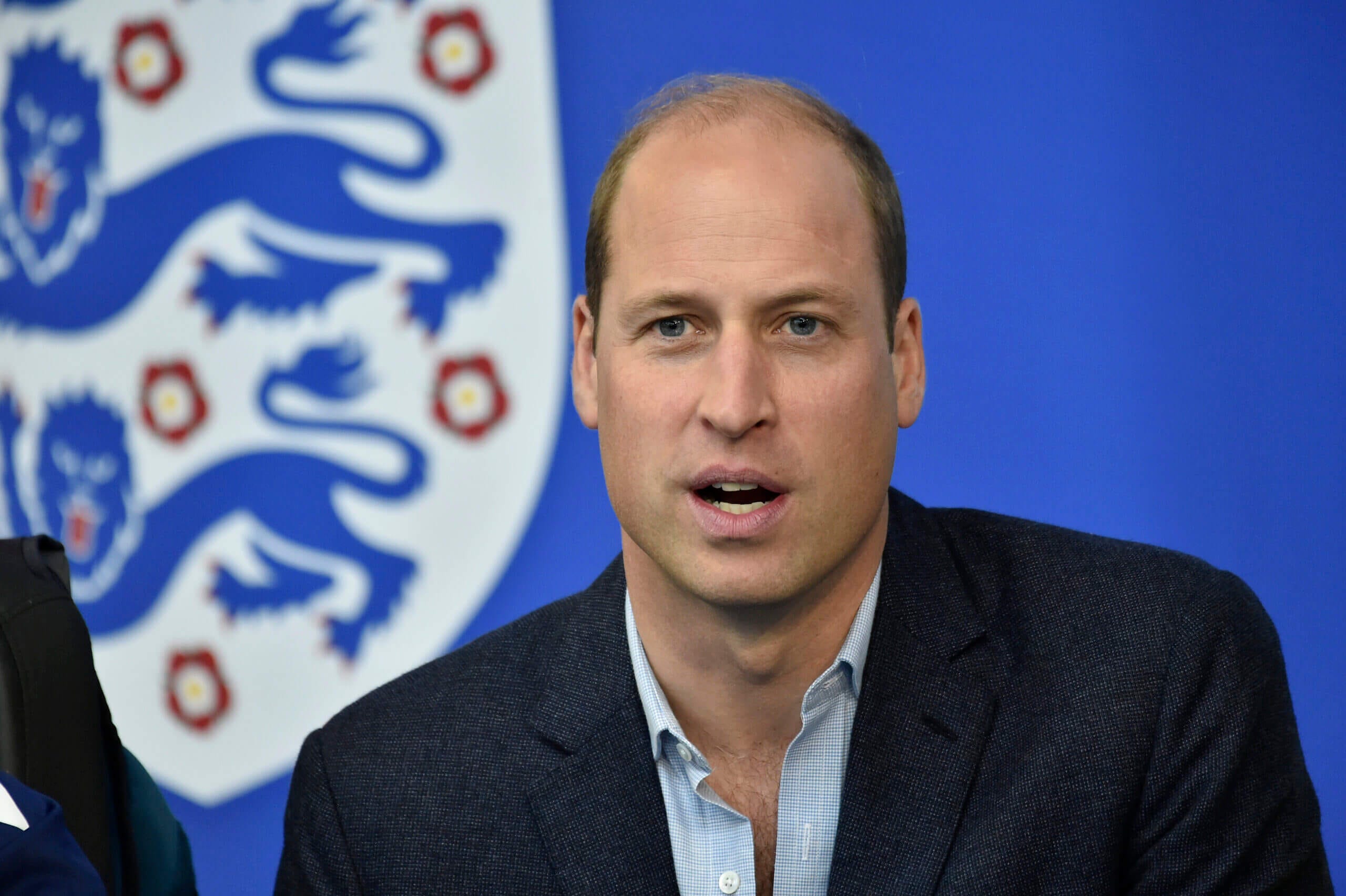
So when sponsorship agencies emerged to service this ecosystem - names like Synergy, CSM, Fast Track, and the European operations of global players - they needed additional skills from their American counterparts.
They needed stakeholder management across government, sport, and commercial interests. Political navigation through federations and public bodies, as opposed to corporations, and legal and regulatory expertise in public procurement and state aid rules. Risk management around reputational issues and political controversy became a key consideration. Long contract cycles required board-level relationship handling, and working with publicly accountable institutions needed compliance capabilities.
European sponsorship became characterised by what it prioritised: governance over growth, compliance over creativity, risk management over effectiveness.
So sponsorship stayed adjacent to marketing rather than integrated within it, because the industry had professionalised around skills that advertising agencies had no incentive to replicate.
APAC puts it all on steroids
If the US established the commercial model and Europe added governance complexity, the Asia-Pacific region - particularly Japan - took the whole thing to its logical extreme.
Dentsu and Hakuhodo have operated as an effective duopoly in Japanese sports marketing for decades, with Dentsu alone controlling approximately 28% of Japan’s national advertising budget. This concentration of power created a sponsorship ecosystem even further removed from marketing effectiveness thinking than its Western counterparts.
Dentsu’s involvement in Olympic marketing goes back to the 1964 Tokyo Games, where it handled public relations. But the company truly entered the modern sponsorship era alongside LA84, when it acquired exclusive rights in Japan for the Olympics and developed the “Gambare Nippon!” (Go Japan!) campaign.
Critically, Dentsu was also a 50% owner of ISL (International Sport & Leisure Marketing), the Swiss agency commissioned by the IOC in 1983 to develop what became the TOP (The Olympic Partner) programme. Meaning it played a pivotal role in helping architect the global rights-selling model itself.
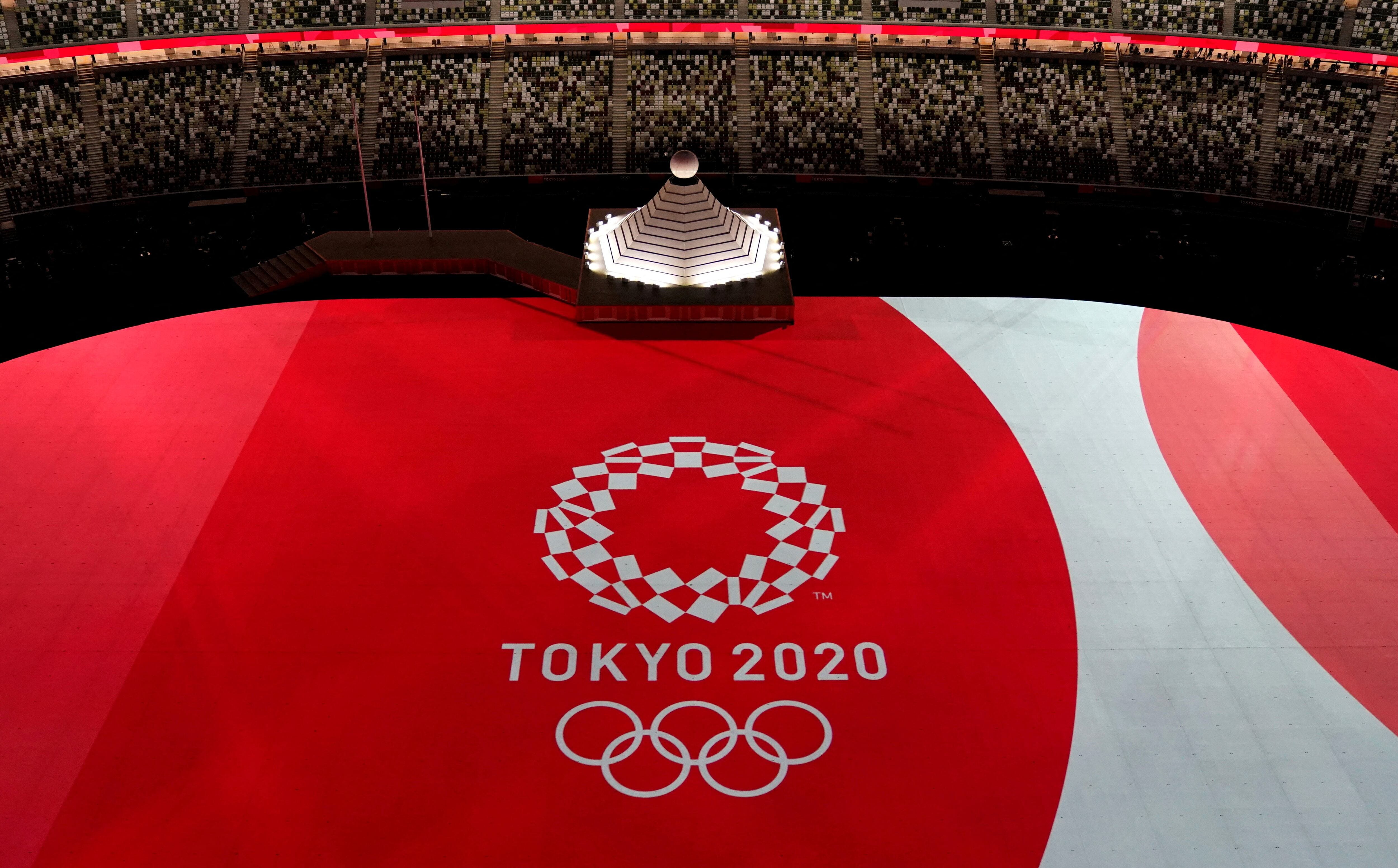
The company’s power reached its apex with Tokyo 2020 (held in 2021), where Dentsu served as the exclusive marketing agent and raised a record $3.6 billion from 68 Japanese sponsors, more than twice the amount raised at any previous Olympics. To achieve this, Dentsu broke with Olympic tradition by allowing multiple sponsors per category, subdividing industries to maximise deal volume.
As one former IOC executive put it: “The Tokyo Games were kind of obliquely called amongst those of us in the business, this is not pejorative in any sense, the Dentsu Games.”
The Dentsu/Hakuhodo model represents everything we’ve discussed - talent-agent logic, political navigation, commercial deal-making - but operating in a market with even less marketing effectiveness culture than the West.
In Japan, there’s less pressure from brands for creative excellence or measurement rigour. The duopoly structure means limited competition. The close relationships between agencies, government, and corporate Japan mean deals get done through relationship management and political navigation, not through demonstrating marketing impact.
In Western markets, at least there’s theoretical pressure to prove sponsorships work. In APAC, that pressure barely exists. The focus is purely commercial: securing the deal, managing the relationship, delivering the contracted assets.
This is where the sponsorship-as-commerce model reached its logical endpoint: concentrated control, state entanglement, and minimal accountability for marketing outcomes.
Enter the Middle East
As the Middle East emerges as a major player in global sport, we’re seeing the arrival of a new cohort of sponsors, rights-holders and agencies without a strong culture of effectiveness.
I spent several weeks in Dubai last year and the prevalence of what Orlando Wood would describe as left-brained advertising - rational, features-and-benefits creative with little emotion - was striking.

When the creative tradition is already weak, and the sponsorship model being imported is a commercial intermediary model, where does creative excellence come from?
The Middle East’s sports ambitions are backed by sovereign wealth and state strategy. That’s nation-building through sport, not brand-building through marketing. The deals are enormous. The ambitions are global. But the question of “does this work as marketing?” isn’t really being asked, because that’s not why the money is being spent.
When major global properties increasingly depend on Middle Eastern investment, and those investors operate with a commercial logic even more divorced from marketing effectiveness than Japan’s duopoly, the structural problem intensifies.
Why did creative become “activation”?
Across every regional model, creativity was pushed downstream into what became known as “activation”.
The language really matters. Activation is a euphemism for ‘on the ground roll-out after the money is banked’. The deal is the product, and everything else is fulfilment.
This is extraordinary when you consider that we know from advertising research that creative quality is the second-largest multiplier of advertising profitability. And there’s no reason to suspect that sponsorship should be any different. The creative work, i.e. how you bring a sponsorship to life, how you integrate it into broader communications, and how you make it distinctive and memorable, should be just as important in sponsorship as in any other promotional channel.
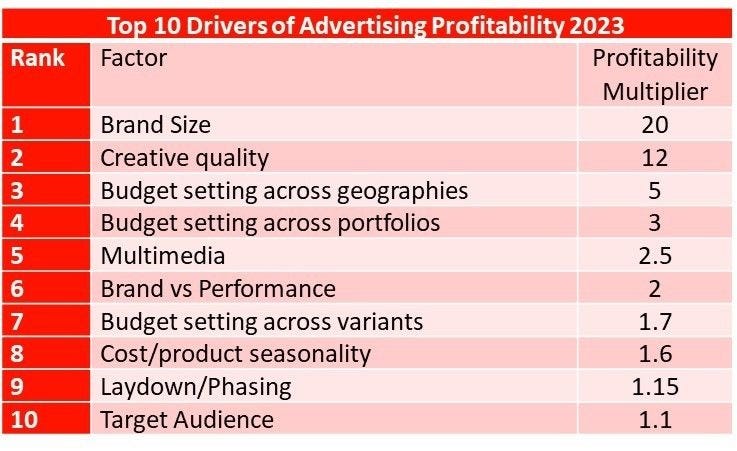
Yet walk into Wasserman, CAA Sports, Endeavor, or any major European or Asian sponsorship agency and look at the organisational structure. The commercial teams - the deal-makers, the negotiators, the relationship managers - dwarf the creative departments. Often by an order of magnitude.
That’s not because creative doesn’t matter. It’s because the business model and professional culture across all three regions were built around a different definition of success. The deal is the product. The activation is the service wrapper.
This is bizarre when you think about it. Brands are spending tens of millions on sponsorships, and the part of the process with the biggest potential impact on whether it actually works in delivering profit - the creative execution - gets treated as an afterthought.
What’s celebrated reveals everything
Even now, the language of sponsorship reflects its origins in commercial intermediation rather than marketing:
Deal announcements lead with contract values and duration
Success stories celebrate negotiation wins and relationship breakthroughs
Industry awards recognise commercial innovation over creative effectiveness
Press releases highlight the prestige of the property, not the marketing impact for the brand.
When Wasserman announces a new partnership, it reads like a Hollywood agency announcing a major client signing. When Dentsu reports on Olympic sponsorship, it’s about the record number of deals done.
This isn’t the case with advertising. There’s never a trade press headline reporting Coca-Cola just bought £20 million worth of ads from ITV. Media spend isn’t news.
The difference says a lot. And it’s why someone working in sponsorship can say “I’m not a marketer” in 2025 and mean it.
The world is changing
The context that made this model sustainable is changing under sponsorship’s feet.
Marketing has matured as a discipline. CFOs and boards expect evidence, not narratives. Marketing effectiveness actually matters to careers now. Brands are increasingly asking: “Did this work? Can you prove it?”
Crucially, they’re also increasing their investment in sports sponsorship.
Meanwhile, sponsorship agencies, whether shaped by US, European, or APAC models, are still largely structured around the old logic: deal-making, political navigation, relationship management, asset delivery.
Some are adapting. Wasserman has invested in data and analytics capabilities and increased creative talent. European agencies are hiring strategists. But these feel like adaptations at the margins, not fundamental restructuring.
The challenges are structural, vary by region, and pose some challenging questions:
If your creative department is one-tenth the size of your commercial team, how do you suddenly prioritise what might matter most?
If your expertise is political navigation and risk management, how do you build credible capabilities in creative effectiveness?
If you operate in a duopoly with no competitive pressure for effectiveness, why would you change?
If sovereign wealth is driving deals for nation-building rather than brand-building, does marketing effectiveness even enter the conversation?
The question isn’t whether sponsorship is part of marketing
It obviously is. Sponsorship sits squarely within Promotion in the marketing mix.
The real question is whether sponsorship professionals can operate as marketers, and whether the agencies that employ them can pivot to providing marketing outcomes rather than commercial intermediation.
As scrutiny on marketing spend increases, this distinction becomes harder to ignore. CFOs and boards tend not to care about prestige. They care about profit.
At some point, someone has to own the outcome. In the end, who cares how big the deal was if you can’t prove it did anything for the brand?